I have been in tech for over twenty years. I have watched cycles come and go. The web. Mobile. Cloud. Each one promised to change everything, and each one, in some quiet, unremarked way, was built mostly by people who looked nothing like me.
We are now standing at the start of another cycle. A bigger one. And I keep noticing the same pattern playing out, the same rooms filling with the same voices, the same defaults being set without much pushback.
I want to say this plainly, because I think the moment calls for plainness:
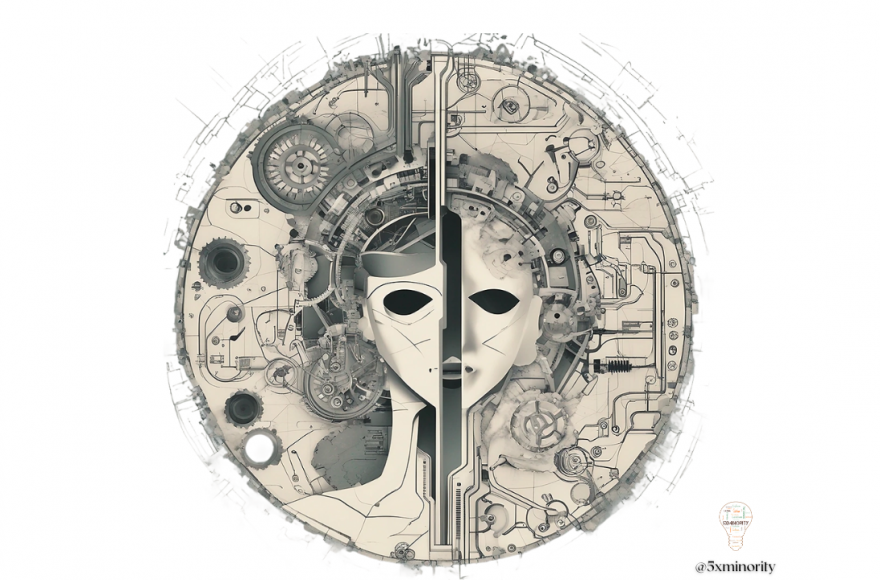
Women belong in the AI era. Not as users. Not as case studies. As builders, decision makers, governors, founders, and skeptics. The defaults are being set right now, and who shows up in this decade will set the standard for the next fifty years.
This is for anyone who has asked themselves, “Is AI ‘my space’ too? Can I take up this space? Does my voice matter in a room of model architectures and benchmark scores?”
Here are five reasons I keep coming back to.
01. AI inherits whoever builds it.
The expression often used in machine learning discussions is “bias in, bias out.” The bias-in-bias-out phrase is the representation of this truth. There is a phrase that gets repeated in machine learning circles: bias in, bias out. Every model is a hypothesis about what matters. Every default, every error message, every “edge case” is somebody’s call.
If women are missing from the rooms that make those judgment calls, we’re not absent in some abstract way. Our needs, our language, our bodies, and our work get coded out of the systems that will shape the next decade.
The numbers are stark, and they have not improved. The International Labour Organization reported in 2026 that women still account for only about 30% of the global AI workforce, just four percentage points higher than in 2016. The World Economic Forum’s Gender Parity in the Intelligent Age white paper, published with LinkedIn in 2025, found that women hold less than a third of AI engineering roles globally and just 12.2% of STEM C-suite positions. The tools being built right now, the ones being integrated into hiring, healthcare, lending, and education, are carrying that imbalance forward into every industry they touch.
This is not a future problem. It is today’s problem.
02. Diverse teams ask better questions.
The hardest part of AI is not the model. It is knowing which problem is worth solving, and for whom.
I have sat in product reviews where a brilliant engineering team built something exquisite for a use case that did not really exist. I have sat in on others where one person, often the only woman in the room, surfaced a use case nobody had considered, and then changed the roadmap entirely.
That is not a feel-good anecdote. It is a pattern. Research from the Boston Consulting Group, surveying more than 1,700 companies across eight countries, found that companies with above-average diversity on their management teams report innovation revenue that is 19 percentage points higher than their less-diverse peers. They also reported EBIT margins 9% higher.
The translation for AI is direct. Women on the team means more questions asked, more edge cases surfaced, and more risks named before they ship. That is not a soft contribution. It is product-defining.
03. The economy pays when we participate.
AI is not a niche industry. It is a layer that will reshape trillions of dollars in economic activity over the next decade. Whoever builds it, deploys it, governs it, and sells it is going to capture an enormous share of the wealth it creates.
The economic case has only grown stronger over time. The World Bank’s Women, Business and the Law 2024 report found that women globally enjoy fewer than two-thirds the legal rights of men, and according to the World Bank Group Gender Strategy 2024-2030, closing the gender gap in earnings alone could deliver an estimated $160 trillion in global GDP per capita gains. The earlier McKinsey Power of Parity analysis put the figure at $12 trillion in added annual GDP. Whichever number you anchor on, the direction is the same. The next chapter of this opportunity gets written in the AI cycle.
If women are locked out of building AI, we are locked out of the wealth AI creates. That is true at the founder level, the executive level, the engineering level, and the everyday-knowledge-worker level. Fluency will directly map to compensation. Skill will map directly to opportunity.
This is a generational economic question dressed up as a technology question.
04. Safer AI needs a wider lens.
Facial recognition systems that fail on darker skin. Hiring tools that downrank resumes with women’s names. Health models trained on overwhelmingly male bodies. Voice assistants that hear men more accurately than women.
These are not bugs. They are the predictable cost of building without us in the room.
The Gender Shades study, led by Joy Buolamwini and Timnit Gebru at the MIT Media Lab, found that commercial facial recognition systems had error rates as high as 34.7% for darker-skinned women, compared to just 0.8% for lighter-skinned men. That research did not come from the companies that built the tools. It came from women researchers who knew where to look because they had lived the experience of not being seen.
Women in AI safety, AI governance, and AI research are not “nice to have.” They are how we catch harm before it scales to billions of users. Every model that ships without that scrutiny incurs a quiet tax paid by whoever was not in the dataset.
05. The next generation is watching.
This one is extremely personal!
Representation is not a poster on a wall or a panel at a conference. It is a teenage girl deciding whether AI is a place she belongs. It is a new graduate observing a woman lead the technical review and quietly thinking, “Oh, I could do that.” It is a mid-career professional realizing she does not need to wait for permission to retrain, to apply, to speak up.
Microsoft research surveying more than 11,500 young women across Europe found that interest in STEM nearly doubles when girls have a role model in the field, jumping from 26% to 41%. Visibility compounds. Every woman who shows up in this era is, whether she means to or not, a permission slip for the one behind her.
I think about that a lot. I think about it on the days I am tired. I think about it on the days I want to log off and let the room sort itself out. I think about the women who showed up in rooms before me so I could be in the rooms I am in now.
We owe the next generation more than survival. We owe them precedent.
So, what now?
Here is what I want you to take from this, especially if you are reading and quietly wondering whether any of it applies to you.
You do not need a machine learning PhD to participate in the AI era. You need three things: curiosity, conviction, and a willingness to take up space. That is it!
This week, pick one:
- Use the tools. Fluency is power. Pick one AI tool, any one, and spend thirty focused minutes learning it deeply. Not skimming. Not watching a video. Actually using it.
- Share your work. If you are already building, teaching, leading, or advising with AI, say it out loud. Post about it. Add it to your bio. Tell one person what you are working on. Someone needs to see it.
- Bring one woman with you. Forward this post. Cite a woman’s research in your next deck. Invite a woman who is one rung behind you to the meeting where decisions get made. Representation does not scale by accident. It scales because we do it on purpose.
The AI era is still early. The defaults, datasets, and decision-makers are all being chosen right now. Who shows up sets the standard for what comes next.
So show up. You were built for rooms like these.
Much Love!
If this resonated, forward it to a woman who needs the reminder. The defaults are being set right now, and who shows up decides what comes next.